Creating a boutonniere with silk flowers can seem tricky, but it’s simpler than you might think. With just a few supplies and a little patience, you can craft a polished accessory perfect for any occasion.
By the end, you’ll be able to assemble a charming boutonniere that looks professional and feels personal. Keep reading to learn each step in detail.
Gather Your Supplies for a Silk Flower Boutonniere
To assemble a silk flower boutonniere, you’ll need to gather your supplies first. Start by choosing flower colors that complement the outfit or event palette—keeping it simple with a single small-to-medium bloom like a rose or lily. Adding one to three filler elements, such as baby’s breath, helps balance the design. Include silk leaves to frame the flower naturally without making the boutonniere bulky. Keep the overall size compact since boutonnieres shouldn’t be overly hefty. Finding the right tablecloth for a round table can also help coordinate your event’s decorative theme. You’ll also need floral tape, wire, and wire cutters for binding and shaping the arrangement. For finishing touches, get narrow ribbon to hide the tape and pins to secure the boutonniere to clothing. Optional beads or feathers can add extra detail, but remember, all these choices influence your boutonniere’s style. Lay everything out beforehand to ensure a smooth assembly process. A ring light with stand can help illuminate your workspace and video tutorials for such crafting projects. Since silk flowers are a popular choice for their durability and realistic appearance, you can also match your boutonniere to the specific event type such as weddings or proms, ensuring the color and style align with the occasion’s formality.

[Package Contents & Size] Inner packaging includes 1 boutonniere and 1 wrist corsage. Each boutonniere is approx. 2.7" W x 4.7" H, wrist corsage is approx. 4.3" W x 2" H.

【Premium Material】The corsage pins are made of plastic and metal, are not easy to bend or break, and are reusable; you can use boutonniere pins for a long time. Corsage pins with smooth surfaces are strong enough and safe for your skin or clothes, ensuring reliability during important events.
How to Prep and Trim Silk Flower Stems Correctly
If the internal wire resists cutting, don’t force it. Instead, push the floral wire through the base to provide extra support. Fold wired stems downward to create a sturdier structure and prevent bending or breaking. Remember, you’ll perform a final trim after wrapping to ensure a neat lapel fit. Since silk flowers don’t need water, your color options stay vivid, allowing you to focus on making precise, clean cuts. Keep all cuts even to avoid frayed fabric or cracked plastic, which helps achieve a smooth, compact finish. A reliable hand pump can help inflate foil balloon stems without causing tears or punctures. Standard placemat sizes can help guide your workspace measurements to keep stems and trimmings contained. Reusing intact materials like foil balloon stems requires careful handling to avoid tears or punctures.
Arrange Flowers for a Balanced, Compact Boutonniere
Trim your silk flower stems evenly, then arrange them into a balanced, compact boutonniere. Start with your focal flower, such as a mini rose, and choose your flower colors intentionally—sticking to a single main bloom keeps the design clean and elegant. Use floral arrangement techniques by placing greenery behind the focal flower to create a neat backdrop, framing the main bloom without spreading too wide. For a more polished finish, you can use a foam board base to provide structure and keep the stems from shifting. When selecting your base, consider using floral foam designed for silk flowers to secure the stems without water. Add one or two smaller accent blooms around the focal point, positioning taller pieces toward the back to achieve a subtle tiered look. Keep the smallest accents at the front or side to maintain proportion. Avoid overcrowding, as too many pieces can make the boutonniere bulky. Tightly cluster the stems and keep the entire design shallow so it sits neatly on a lapel. For securing, use floral wire to hold the flower placement firmly. Aim for a crisp, refined shape that looks deliberate and well-balanced. Just as you would match a tablecloth size to your table’s dimensions, measure your lapel area to ensure the boutonniere’s overall width stays proportional and doesn’t overwhelm the wearer.

Package includes:20pcs floral foam blocks are included,and each round foam measures 1.4 x 3 x 3 Inches.
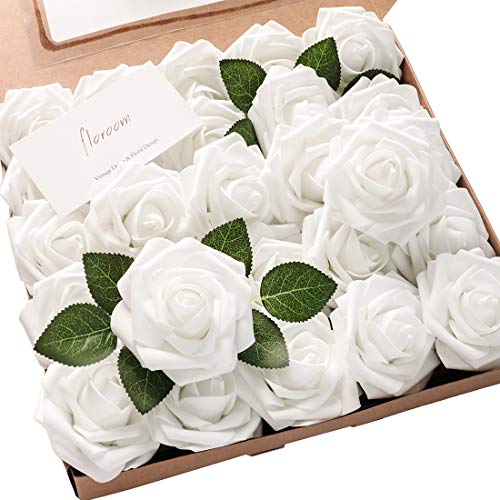
❤️Material: Floroom Studio's artificial roses are crafted from soft, high-quality PE foam, which lends them the look and feel of fresh flowers.

High-Quality Floral Foam Blocks: Our pack includes 6 green floral foam blocks (6.00" L x 3.00" W x 1.75" H), perfect for floral arrangements and crafts. Our green foam for flower arrangements has strong absorption and is ideal for fresh and silk flowers, artificial flower arrangements, and plant displays.
Wrap and Secure Your Silk Flower Boutonniere
To wrap and secure your silk flower boutonniere, start by reinforcing the stems with floral wire. Insert the wire through or around each stem, then fold it down alongside the stem and twist the ends tightly to keep the flower head stable. Keep all wire ends aligned to avoid bulk, ensuring a sleek look. If you’ve used floral foam, make sure it is completely dry before taping, since moisture can prevent the tape from sticking effectively. For a natural appearance, cut the floral tape to half-width using a folding method before you begin. For a well-lit outdoor event, consider pairing your finished boutonniere with a patio umbrella with lights for consistent ambiance. To preserve the moment, you might also set up a guest book camera nearby so guests can instantly capture their well-wishes alongside your floral work. A round arch can provide an elegant backdrop for displaying your boutonniere creations at the ceremony.
Next, take your floral tape and begin wrapping just below the flower head. Stretch the tape slightly as you wrap downward to activate its tackiness. Overlap each layer for even coverage, using a diagonal or spiral motion to create a smooth, professional finish. Choose a tape color that matches your flower stem or foliage for a coordinated look. Keep the wrapping thin and neat; if the tape is too wide or thick, split it to better control the coverage. As you wrap, press the tape firmly to eliminate gaps and smooth out wrinkles. When finished, pinch off the excess tape for a clean end. Your boutonniere’s stems should now feel firm, secure, and ready to wear.

This floral wire is ideally suited for arts and crafts projects. It is used for everything from jewellery making to securing wedding bouquets.

【Premium Material】These artificial leaves are made of silk fabric that is comfortable to the touch and well made. The stem is made of flexible wire and can be freely adjusted in shape.
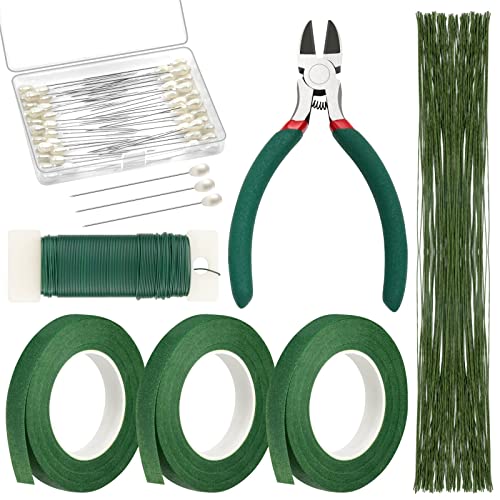
FLORAL ARRANGEMENT KIT INCLUDED – 100 pieces green stem wire 26 gauge, 114 feet green paddle wire 22 gauge, 3 rolls dark green floral tape, 50pcs corsage boutonniere pins and 1 pair wire cutter. These wreath making supplies are all you need for DIY flower arrangements, bouquets, and boutonnieres etc.
Finish With Ribbon, Twine, or Decorative Wire
To finish the boutonniere, cover the wrapped stems with ribbon, twine, or decorative wire for a sleek, polished appearance. For formal events, opt for a wider ribbon around 1.5 cm wide to add a visible accent, or choose a thinner 9 mm ribbon for a more subtle stem wrap. Matching the color with the suit or wedding palette creates a cohesive look. For a rustic or casual style, twine offers a natural, textured finish—wrap it tightly to avoid gaps and secure with a small knot. The choice of material influences the overall feel: satin ribbon lends elegance, while jute twine provides a relaxed, earthy vibe. Decorative wire is best hidden under tape or ribbon, serving mainly as additional structural support. Always ensure the finish is snug and neat, trimming any excess to prevent fraying. For additional guidance on coordinating accessories, consult an expert review on choosing the perfect pillow for your ring bearer. For a polished presentation, consider the same attention to detail used in custom logo tablecloths for quality and value.

Perfect color matching: We've utilized additional colors to embellish the blue theme of our blue prom corsage and boutonniere set. Silk wristbands, crystal beads, etc.Each color possesses a unique proportion, seamlessly blending into the overall theme. This color coordination also enhances the foil effect.

Package includes: 1 pieces boutonniere and 1 pieces wrist corsage and 1 solid color neckties for men. Complement your Formal Date with our Matching Wrist Corsage and Boutonniere set, the perfect formal set when it comes to adding your floral accessories for Prom. Warm note: The artificial flowers may be squeezed due to transportation, you can adjust them to the most natural state when receiving the items.

Wedding Accessories Pin for Men Women: Perfect for every member of your wedding party, this boutonniere corsage works beautifully for grooms, groomsmen, best men, ushers, and fathers of the bride and grooms, while matching corsage styles suit brides, bridesmaids, mothers of the couple, and other guests, the elegant blue-and-white theme complements any wedding palette
Pin Your Silk Flower Boutonniere to a Lapel
To pin your silk flower boutonniere to a lapel, start by placing it on the left lapel, which is standard for men’s wear, using the buttonhole as a guide. Position the boutonniere just below the widest part of the lapel, with the bloom facing outward. This placement mirrors classic styles from the 19th century and icons like Cary Grant. Each pin includes a small safety tube to protect apparel from wear and keep the pin securely in place, a feature of the PinMart Silk Flower Stick Boutonniere.
Begin inserting the pin from the back of the lapel, pushing it through the fabric into the thickest part of the boutonniere’s stem. Use a downward angle to ensure stability. Avoid pinning through delicate petals; instead, pass the pin through the fabric and into the sturdier part of the stem. Then, thread it back through the lapel so both ends are hidden behind the fabric. Hold the boutonniere steady to keep it in place while threading. Always verify local regulations for any additional restrictions if you plan to wear this in a public venue.
Finally, check the positioning: the flower should sit flat against the lapel without tilting, and the pin ends should not be visible from the front. If the boutonniere feels loose, add a second pin for extra security.

This men's boutonniere, with its carefully chosen artificial flowers and foliage, adds an elegant and romantic touch to your wedding atmosphere.

[Multipurpose Use] - Our brooch rose pins are suitable for many occasions, such as wedding, prom, engagement, banquet, ceremony, cocktail, anniversary, dating, party, formal dinner, business meeting, office, etc. They can be used on the lapel of suits or coats, and decorated on scarves, hats and bags.These suit pins can also be given as gifts to friends, couples or family members

Package includes 16 colors of boutonniere pins, easy to select and can match well with your most outfits for different occasions, add a dapper element to stand out in the crowd.