Thinking about using banners to promote your message? The right choice depends on whether you need something durable that lasts outdoors or a flexible digital option you can update instantly.
Both types have their own strengths, and choosing the right one can make a big difference. Keep reading to find out which banner fits your needs best.
What’s the Difference Between Digital and Physical Banners?
The main difference between digital and physical banners lies in how they are made, used, and updated. Physical banners are typically printed on durable materials like vinyl or fabric, designed to withstand weather conditions for about one to five years. While they require a significant upfront investment for printing and installation, they can be cost-effective over time if used multiple times or in permanent locations. For a similar permanent setup, photographers often choose a high-quality ring light with a sturdy stand to ensure consistent lighting for portrait sessions. Digital banners, on the other hand, are displayed electronically through screens or digital signage. They can be updated instantly via software, allowing you to change the message or design without additional printing costs. Although they don’t physically wear out, digital banners may incur ongoing costs related to software licenses, hosting, or ad-spend. If you need a sturdy, long-lasting sign for consistent local exposure, physical banners are the better option. For flexibility, frequent updates, and lower revision costs, digital banners provide greater value. When selecting a physical banner, consider folding chair covers as a versatile solution for protecting and branding temporary signage setups. If you are reusing a physical banner, you can apply safe cleaning methods to extend its lifespan, similar to how foil balloons can be reused safely and effectively.

3x6 Feet Blank Vinyl White Banner Sign with Grommets

Package Information: You will get 2 pieces 2×4 feet white polyester oxford cloth blank banners and 8 pieces hanging ropes, enough to make different banners that you need and suitable for haning on different places

Equipped with a 2-inch core, our product ensures seamless compatibility with different printing setups.
6 Banner Types and Exactly When to Use Each
Choosing the right banner type depends on your specific needs, with each one excelling in different situations. Retractable banner stands are ideal for trade shows and lobbies because they are quick to set up and easy to store, making them reusable multiple times. X-frame banners are budget-friendly and quick to assemble, making them suitable for short-term retail promotions or sales events. For wedding ceremonies, a wedding arch often serves a similar structural and decorative purpose, providing a focal point for vows and photos.
Fabric tension displays provide a smooth, upscale appearance, making them perfect for high-end retail environments or as photo backdrops during creative installations. Feather flags are designed to attract attention from a distance, making them effective for grand openings and outdoor promotional events. Pole banners help create a coordinated streetscape and are excellent for festivals or neighborhood promotions.
For indoor large-scale displays, hanging banners and event backdrops serve well as signage or photo backgrounds. When choosing outdoor or temporary banners, always opt for eco-friendly materials, especially if you need frequent replacements. Selecting the appropriate banner type ensures your messaging is effective, visually appealing, and aligned with your event or promotional goals. For inspiration on crafting a visually cohesive outdoor display, consider how fairy light trees are reviewed for quality and performance in seasonal settings. A handmade option like a felt flower garland offers a charming, low-cost alternative for indoor backdrops or decorative accents at small events.

Designed for 33.5"x80" Banners Only - Fixed Height (No Adjustment Needed)

⚠️ HARDWARE ONLY (NO GRAPHIC INCLUDED): Please note this listing is for the premium 33" x 81" retractable banner stand base and travel bag ONLY. It does NOT include a custom printed canvas or vinyl. Perfect for local print shops, businesses replacing broken bases, or DIY users utilizing their existing promotional graphics.
Vinyl vs. Fabric vs. Mesh vs. Retractable: How to Choose
Vinyl is the best choice when print resolution and color vibrancy are top priorities. It produces sharp, detailed graphics ideal for storefronts and backdrops. Vinyl also offers material durability, lasting between 2 to 5 years in calm weather conditions, making it suitable for long-term outdoor use. Its resistance to wind, rain, and UV rays ensures your message remains crisp and intact over time. However, it tends to be heavier and less breathable, which can make it less suitable for indoor displays where a softer appearance is preferred. If your project demands high-quality images and durability, vinyl stands out as the most reliable option. For outdoor stability, using sandbags helps weigh down the banner in windy conditions without damaging the material. For events like a wedding, you might consider a ring bearer pillow instead, as it offers a softer, more decorative alternative for carrying accessories.
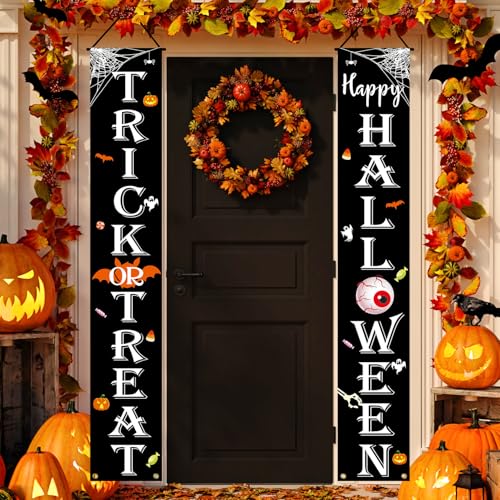
Classic and Well Designed: Designed with "Happy Halloween" and "Trick or Treat", featuring patterns of pumpkins, ghosts, bats, spiders, and more, creating a festive Halloween atmosphere.

THICK MATERIAL: The blank banner is made of thickened 300D oxford fabric, which is thick and soft to touch, waterproof and not easy to wrinkle, suitable for indoor as well as outdoor use

Durable Material: Made of quality polyester oxford cloth material that is durable and not easy to break for long-lasting use.
How to Pick the Right Banner Size for Your Space
To choose the right banner size for your space, start by measuring the actual mounting surface. Subtract borders, obstructions, and clearance needed for installation to determine the usable area. Don’t rely on the nominal wall size, as actual mounting surfaces often differ. For inspiring visual ideas, consider step and repeat designs used at events. Many modern events also use audio guest books to capture personalized messages from attendees.
Match your banner dimensions to the expected viewing distance. For example, a letter height of about 3 inches works well for viewers approximately 30 feet away. For distances around 100 feet, a letter height of 10 inches is more appropriate. Larger viewing distances require bigger banners to ensure your message remains clear and legible. Beginner safety tips for handling materials also apply when creating banners.
Consider the space type when selecting size: small banners (measuring roughly 2 to 3 feet wide) are suitable for close-range visibility, generally between 5 and 20 feet. Large banners, spanning 6 feet or more, are better for distant viewing, often from 60 to 300 feet or more. Adjust your banner size accordingly to optimize visibility and impact in your specific setting.

Fully Customizable Design – Upload your own logo, photo, or text to create a one-of-a-kind 3x6 vinyl banner for any occasion, from birthdays and weddings to graduations and grand openings.

Ships Ultra-fast Overngiht

CUSTOMIZE YOUR BANNER - Want a customized banner for your next event or advertising campaign? You can now create your own unique customized banner with the many customization options we provide. We have a large selection of sizes and colors, so you can choose one that complements the style of your event. To fully customize it, you can also add your own images, text, and logos.
What Makes a Banner Design Legible at Any Distance
To ensure your banner is legible from any distance, focus on a few key design principles. First, letter size should be scaled appropriately: 1 inch of height is suitable for roughly 10 feet of viewing distance, but for visibility at 50 feet, increase the letters to 4 to 6 inches tall. High contrast is essential; use dark text on a light background or the reverse to combat glare and sunlight. Choose clear, bold sans serif fonts—avoid scripts and thin strokes that can blur or vanish from a distance.
Spacing also matters. Space letters generously to prevent them from merging, and keep margins clean around the text. Limit yourself to a single headline rather than crowded paragraphs, which are harder to read quickly. Test your banner by creating a scaled mockup from your target distance; if it isn’t readable instantly, simplify your design with fewer words, larger letters, and stark contrast. Remember, simplicity always wins in making your message clear at any distance.
Where to Place Banners for Maximum Visibility
The best locations for maximum visibility are high-traffic routes and natural gathering points where people already pause or move slowly. Placing banners near intersections captures drivers during traffic slowdowns, increasing the chance they will notice your message. Areas where crowds gather, such as entrances, queueing points, and food zones, guarantee repeated exposure as people pass by multiple times. Car parks and arrival routes also prime attendees before they enter the venue, making them ideal spots for prominent banners. For example, choosing vinyl banners over other materials ensures durability in outdoor conditions like wind or rain. Similarly, understanding the composition of sparklers helps in selecting safe, high-quality options for events.
For pedestrians, mount banners at eye level—about 5 to 7 feet high—to ensure they can easily see your message without bending or straining. For road traffic, position banners between 8 to 12 feet high to stay clear of parked cars and other obstructions. Always aim banners toward approach paths and avoid blocking sightlines with trees, poles, or open doors. Venue-specific spots like registration desks, storefront windows, and stage backdrops are effective because people tend to pause there. During peak hours, check for obstructions and adjust banners accordingly; avoid placing them in areas that are empty or less trafficked at the time. Your goal is a clean, clear view from the natural line of sight of your target audience, ensuring your message is seen quickly and effectively. When crafting confetti balloons, using a small amount of rubbing alcohol on the inside helps the confetti stick to the latex.

Versatile DIY Creative Canvas:This blank white banner is a perfect creative canvas for handwritten texts, custom patterns, slogans, or DIY marks. Freely express your style for parties, weddings, office decor, or business promotions. Let your imagination run wild and create unforgettable personalized displays.

✔MATERIAL : 14oz Premium Coated Vinyl , Semi-Matte with 1000 X 1000 denier. Heavy Duty Vinyl, 2X stronger than 15oz laminated vinyl, Crack Free. Super smooth, Scrimless, Tear and fade resistant

Material: 13 oz. Premium Scrim Glossy Vinyl material. Sizes Offered: 2 ft x 3 ft, 2 ft x 4 ft, 3 ft x 5 ft, 3 ft x 6 ft , 3 ft x 8 ft, 4 ft x 8 ft, 5 ft x 8 ft, 6 ft x 6 ft
How Digital Banners Compare to Physical Banners for Brand Visibility
Physical banners provide uninterrupted visibility in local spaces because they cannot be skipped or blocked. They remain in place, offering passive, repeated exposure that helps build familiarity and trust within your immediate community. This consistent presence naturally increases recognition and engagement from local audiences. While digital banners can target specific behaviors and allow for immediate campaign adjustments across web, mobile, and social media, they rely on users actively viewing or interacting with them. For events, specialized uplight fixtures can enhance physical banners by illuminating them for night-time visibility, similar to how top uplights for events create dramatic lighting effects. Understanding local regulations, such as whether sparklers are legal in Illinois, can similarly affect how you plan outdoor brand displays to ensure compliance and safety.
Physical banners, on the other hand, create an undeniable local presence that doesn’t depend on user interaction. If used for long-term campaigns, they tend to be more resource-efficient and environmentally sustainable, especially in high-traffic areas. Digital banners excel in broad reach and detailed tracking but require ongoing energy and data use, making them less eco-friendly. Both formats have their strengths, but for continuous, localized visibility that fosters trust, physical banners remain highly effective.