Getting your balloons to float perfectly can be tricky, especially if you want to keep everything neat and controlled. The key is in the right weight—simple to make at home with common household items.
Whether it’s a plastic bottle, jar, or fabric bag, you can easily customize your own balloon weights. Keep reading to learn exactly how to do it.
Match Balloon Weight to Balloon Size: A Quick Sizing Chart
To match balloon weight to size adequately, follow these guidelines. For small latex balloons measuring 9 to 12 inches, an 8-gram weight is typically sufficient. Moving up to medium-sized latex balloons, from 14 to 18 inches, requires a weight between 15 and 50 grams. For foil balloons, 18-inch designs generally need 8 to 15 grams, whereas larger 30-inch foil balloons require 30 to 100 grams. Special shapes like 22-inch bubbles benefit from around 35 grams, and 15-inch Orbz usually need 30 to 35 grams. For context, top party favors often include balloon weights as practical add-ons for celebrations. For outdoor installations, consider using curtain lights with integrated weights to maintain stable positioning. If reusing foil balloons, ensure they are safely deflated and stored properly to avoid tears or helium loss.
These rules help simplify the selection process: one 8-gram weight covers most small latex balloons, a range of 15 to 35 grams suits mid-size or specialty balloons, and 90 to 100 grams is ideal for larger latex or 36-inch format balloons. This quick reference ensures you choose the right weight the first time, avoiding guesswork or multiple adjustments.

Holds down one 9" latex or one 18" foil balloon RoHS Compliant Made from Polypropylene plastic material Assorted Colors
Gather Three Simple Household Items for Your Balloon Weight
Plastic bottles, cans, and jars are three simple household items that work well as balloon weights. Plastic bottles are especially popular because they can be filled with water, sand, or small stones to keep larger balloons stable, and they’re easy to decorate with paper, paint, or ribbon to match any theme. Cans, like soup or coffee cans, are sturdy and sit flat, making them a good option for outdoor setups; wrapping them with tissue or fabric adds a decorative touch. Jars, such as mason jars, are versatile with wide openings that make filling straightforward, and their glass surface can be decorated with ribbon or cellophane to coordinate with your event style. All three items are reusable, inexpensive, and adaptable, making them practical choices for securing balloons during celebrations. When selecting the best option, keep in mind that premium latex balloons often require heavier weights to stay grounded, especially in outdoor settings. For a more decorative approach, you can also create honeycomb centerpieces that pair beautifully with these weighted balloons for a cohesive party display. To improve the lighting in your celebration photos, consider positioning a ring light nearby to reduce harsh shadows on the decorations.
Fill Your Balloon Weight Base With Sand, Rice, or Coins
Fill your balloon weight base with sand, rice, or coins to achieve the desired heft. Sand provides maximum density in a small volume, making it ideal for compact weights. Use a funnel with dry play sand to ensure smooth flow and easy filling. Rice is lighter, so you’ll need more volume to reach the same weight, and it’s a cost-effective option. Coins offer precise, reusable weight because you can add or remove individual pieces as needed. Make sure to secure the closure tightly to prevent leaks, especially with granular fillers like sand and rice. For outdoor displays, heavier fillers like sand help stabilize the setup. Double containment, such as a sealed pouch inside the balloon shell, enhances durability. Once filled and sealed, your base will be stable and ready for the next step. For trade show displays, choosing banners for trade show often requires matching the right weight to the display stand to prevent tipping. Leaving air space inside the bottle when using sand as a filler allows the balloon to flex and conform better to the weight base, improving its hold on the assembly. For maximum density, a fog machine can produce a similar effect by using a high-quality fluid and optimized heating element to ensure consistent output. If you prefer a lightweight and porous alternative for crafting, floral foam options offer a secure base for inserting stems without adding bulk.
Attach the Ribbon to Your Balloon Weight Without Weak Points
Attach the ribbon to a dedicated anchor point on the weight, such as a built-in loop, hook, or clip. This prevents creating a weak link that could break under tension. Tie each ribbon separately to this point, avoiding shared knots that weaken the connection. Do not attach multiple ribbons together first, as this can cause uneven balloon separation if one ribbon fails. For a festive look, consider using linen-like cloth napkins as an alternative decorative weight on your Thanksgiving table. For a sturdier ceremonial setup, consider securing the arch with balanced timber frames to ensure stability. You can also choose a pillow for ring bearer that includes a built-in ribbon anchor for a similar purpose.
When securing the ribbon, place the knot low on the foil balloon’s tail, away from the valve. This helps manage rope tension without risking damage to the seal. Use a secure knot or heavy-duty tape for a firm tether. Avoid tying around the weight’s body, as movement here can cause wear and tear. Proper attachment at the designated point ensures your balloon remains anchored safely.

Everyday Balloon Weight Design: Each 0.22lb/100g balloon weight helps hold a small number of helium balloons in place, keeping your decorations neat and organized for indoor settings

Set of 24 Balloon Weights: You will receive 24 pcs silver balloon weights and 1 roll 500 yards ribbon, the height of the weight is about 5 inch, the weight is about 170g/ 0.37 ponds. Plenty of quantity will easily meet your daily decorating needs and DIY requirements

What You Will Get: The package inludes 24 pcs silver Balloon Weights Metallic Anchor and 1 roll silver Iridescent Crimped Ribbon. These will ensure your decorations stay put throughout the festivities
Secure the Balloon Weight Fill to Prevent Spills
To secure the balloon weight fill and prevent spills, start by using a sealed container like a water bottle as your fill base. Fill it only partway to leave an air gap, which helps reduce sloshing and pressure buildup. For added stability, place the fill inside a balloon or fabric pouch, then tie the neck tightly after removing excess air. Avoid overfilling, as stretching the latex weakens it and increases spill risk. Reinforce the closure by twisting the neck, then secure it further with a zip-tie or tape over the knot. Keep the closure compact to prevent snagging. Stop filling before reaching maximum capacity to maintain control and prevent shifting of contents. Before placing the weight near guests, check for wobble and inspect all seals to ensure they are tight. This approach ensures lasting stability and minimizes the chance of spills during use. For even greater stability, you can create double balloon weights by inserting a balloon stick and nesting one balloon inside another before filling with water. To further enhance setup stability, consider using a ring light with stand as a sturdy counterweight anchor for larger balloon displays. For a truly polished presentation, consider using a graduation backdrop as the perfect setting for your balloon display.

Multiple‑Pack Selection Available: Available in 2‑pack or 4‑pack sets to match your event scale. These white U‑shaped water weight bags fit balloon arches and column stands, great for weddings, birthday parties, baby showers and various party decorative occasions.
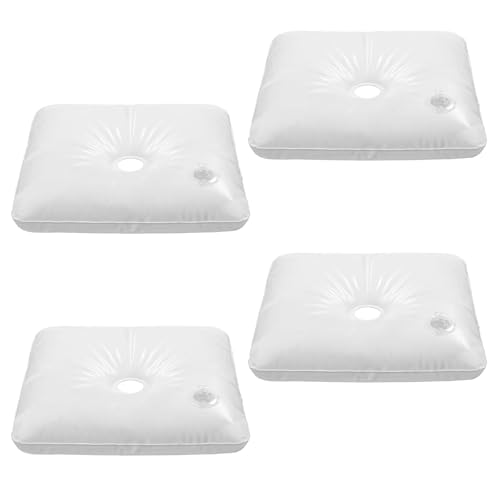
Upgraded Thickened Material: The balloon weights, crafted from upgraded thickened 5-layer PVC, with reinforced edge seams to prevent cracking and leakage. Ideal for indoor or outdoor parties, ensure stable arch setups with minimal effort

Upgraded Thickened Material: The balloon weights are used 5-layer Thickened PVC material, with reinforced edge seams to prevent cracking and leakage, and has a long service life
Decorate Your Balloon Weight to Match the Party Theme
To match your balloon weight to your party theme, start by selecting a container that reflects your theme’s style. Cover it with fabric, paint, or ribbon to create a cohesive look. Focus on color coordination by matching the weight’s finish to your balloon palette—gold bar-style weights work well with rainbow balloons, while neutral burlap and twine suit more understated themes. Material choice is key: burlap pouches suit rustic or farmhouse events, glass jars elevate formal decor, and painted boxes allow for custom patterns. For a softer appearance, wrap plain bases with fabric, or add metallic film to small containers for a shiny, festive effect. For playful themes, fill decorative jars with wrapped candies or painted rocks. Coordinated trims like ribbon or twine help the weight blend smoothly with your centerpieces, ensuring a unified and polished display. During festive seasons, you might also incorporate traditional red lanterns to enhance the visual appeal and thematic consistency. For evening outdoor events, consider incorporating a solar light umbrella to provide both ambient lighting and a durable, weather-resistant base for your balloon arrangement. For the best results, choose models built with wind-resistant construction that also provide integrated lighting for extended outdoor use.
Test Your Balloon Weight Before the Event Day
Test your balloon weight’s holding power before the event day by conducting a load test with the exact same balloons you plan to use. Ensure the balloons are filled to the precise size and helium amount specified for your display. Attach the weight to the full bouquet rather than just one balloon to accurately replicate the actual hanging situation.
To verify stability, add a known mass to check the helium lift capacity and observe whether the cluster remains steady or drifts. Conduct the test in your intended display location, including any airflow from vents or fans that might affect the balloons. Watch for tipping, sliding, or spinning, especially if the base is flat.
Gently tug on the knot, ribbon, or clip during the test. This will help you confirm that the attachment points won’t slip or detach under light handling. Record the type of balloon, fill amount, and test conditions to keep track of your setup’s performance. Repeat the test multiple times to ensure consistency, especially after changing balloon size, fill, or placement. Keep your successful setup untouched until the event begins. For filling balloons precisely, consider using a reliable balloon pump to maintain consistent inflation.
Adjust a Balloon Weight That’s Too Light or Heavy
To improve the balance when your balloon weight is too light or heavy, fine-tune by adjusting the string length or shifting balloon positions. Your goal is to achieve equilibrium by balancing the upward buoyant force against the combined weight of the balloons, helium, string, and anchor. For best results, scale your anchor mass to the size of your balloons: use about 8 grams for a 9-inch latex balloon, 14 to 16 grams for a 12-inch balloon, and up to 100 grams for larger mixed groups. This demonstrates that air has mass by observing how the balance tilts when the mass of one balloon changes. Continue making small, measured adjustments until your display stays level and remains stable. For added precision, consider that LED strip lights can be used to illuminate the anchor area for better visibility during adjustments. For evening events, consider incorporating fairy light options to add a warm glow that complements the floating display and enhances the overall ambiance.

Rich to Use: the quantity of water weight bags depends on your choice, a rich amount that can meet your use and replacement needs easily, also nice for sharing with others

Package Included: The balloon stand kit includes 4 sets of balloon stand , each balloon stand is composed of 7 cups, 1 base, 4pcs joints, 3pcs 7.9inch poles, 8pcs 13.8inch poles

High-Quality Material: Moretreat balloon weights are made from durable, high-quality materials, ensuring long-lasting use and a beautiful appearance
Make Reusable Balloon Weights From Jars, Bottles, or Fabric Bags
Reusable balloon weights can be easily created from jars, bottles, or fabric bags. To make a weight from a jar or bottle, fill it with dense materials like sand, pebbles, marbles, or candies to provide stability. For jars, tie the balloon ribbon around the neck or just under the lid ring to keep the balloon anchored securely. You can add decorative touches by dressing the jars with fabric or ribbon that match your event theme, making them both functional and attractive.
Small bottles are also effective—fill them with water, sand, or beans, then wrap the outside with foil or decorative paper to conceal the fill. Fabric bags made from materials like organza or burlap are ideal too. Fill these with rice, beans, or other dense fillings, then knot the top tightly to prevent spilling. Using heavier fills like sand ensures the weight remains stable and prevents tipping over. Remember to match the fill amount to the size of your balloon to improve effectiveness. These weights can double as take-home favors—simply fill them with candies or colored beads for a personalized touch.
Keep DIY Balloon Weights Safe for Kids and Outdoors
To keep DIY balloon weights safe for kids and outdoors, focus on using soft, non-toxic materials with no small parts or hard edges. Material options like lightweight fabric, plush, or foam are ideal because they won’t pose a choking hazard or cause injury if handled roughly. When making helium balloons, give each balloon its own weight and tie ribbons individually to prevent drifting. Outdoors, use heavier bases or secure weights with sturdy stakes to withstand wind, which can easily lift lighter weights. Keep ribbons short to reduce snagging and check anchors frequently to ensure they remain secure. Never leave children under 3 alone with balloons or weights, and supervise older kids closely. Remove any broken balloon pieces immediately to prevent choking hazards. Store all materials out of reach before setup, and avoid releasing balloons into the environment to protect wildlife. Properly securing everything ensures a fun and safe outdoor celebration.