Wondering how long your helium tanks will last during your event? The answer depends on the size of the tank and how much helium you use—typically, a tank will last between 20 and 50 hours of continuous filling.
Knowing this can help you plan better, especially when timing your balloon preparations. Keep reading to learn the full details and make your helium use as efficient as possible.
Helium Tank Run Times: 20–50 Hours by Size
Helium tanks come in a range of sizes, so their run times vary significantly. Expect anywhere from 20 to over 50 hours of total usage depending on the tank you choose. Smaller disposable tanks typically last about 20 to 30 hours, making them suitable for short events. Keep in mind that the balloon float time often limits your decorating window more than the helium supply itself. Latex balloons usually float for only 5 to 7 hours, so plan accordingly. For safety, never leave a helium tank unattended during long setups. Mid-size tanks can extend run time to around 30 to 40 hours, which allows you to fill more balloons while maintaining their appearance throughout an event. Large tanks can exceed 50 hours of use, but environmental factors like humidity and altitude can reduce actual performance, so always factor in some extra time when planning. For example, the best helium tanks for 100 balloons often include models specifically rated for that volume. For outdoor events, consider solar light umbrellas to maintain brightness after sunset. For a more decorative setup, top-rated models with integrated lighting features can improve visibility in low-light conditions.

Create DIY Balloon Decorations: No need to run out and buy helium tanks or balloons anymore! This kit allows you to fill and tie your own balloons at home.

CAPACITY FOR YOUR HOME CELEBRATION — This 13L helium tank for balloons at home fills approximately 45–50 9-inch latex balloons, making it easy to plan floating balloon decorations for your event. Actual balloon count varies with balloon size, inflation level and gas lost during filling. Larger balloons use more helium and reduce the total number you can fill.

Ultra-Pure Helium for 50 Balloons—Experience the difference with premium quality! Filled with 400L (up to 14.1 cu.ft) of high-purity helium, this tank offers superior floating power. It provides enough capacity to easily inflate up to 50 standard (9-inch) latex balloons. Pro-tip: For the longest floating time, foil balloons over 20" are highly recommended
How Many Balloons Can a Helium Tank Fill Per Size?
The number of balloons a helium tank can fill depends on its cubic footage capacity and the size of the balloons. An 8.9 cubic foot tank can fill approximately 16 to 18 standard 11-inch latex balloons. If you switch to nine-inch latex balloons, the count rises to about 30. For a medium tank with a capacity of 14.9 cubic feet, you can fill 25 to 30 standard 11-inch balloons, or up to 50 nine-inch balloons. Larger tanks, like a 40 cubic foot cylinder, can fill between 30 to 75 standard 11-inch balloons. A 291 cubic foot tank can fill roughly 582 balloons of the same size. For those planning a ceremony, selecting the best chair covers can similarly depend on tank capacity when coordinating helium-filled decor. Keep in mind that helium purity influences how long your balloons will float, but it does not significantly change the number of balloons you can fill. Always follow safety procedures by securing tanks upright, using a regulator, and never inhaling helium directly. For event planners, trade show displays often require smaller, portable helium tanks for short-term balloon use rather than large cylinders. For photography and video lighting, ring light quality can also vary by tank size when using helium for balloon decor.

"BALLOON TIME" HELIUM BALLOON KIT

Medium Size, High Capacity Helium: Our medium size compact tank is filled to 115 bar pressure and contains enough helium to fill up to 50 × 9-inch latex balloons. The high-pressure design packs substantial helium into a convenient, portable tank, so you can inflate more balloons without needing a bulky cylinder.
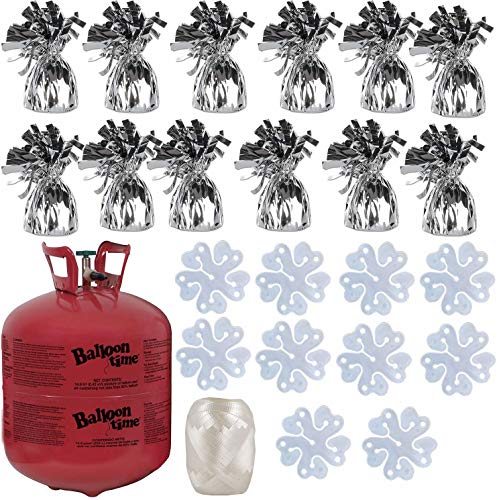
Large 14.9 cu.ft Helium Tank: Balloon Time Disposable Helium Tanks for parties and celebrations.
Tank Runtime vs. Balloon Float Time: Key Difference
Tank runtime and balloon float time measure different aspects of helium use. Tank runtime refers to how long the helium supply lasts while filling balloons; it depends on the size of the tank, the volume being filled, and how much helium is wasted during the process. Balloon float time, however, indicates how long an inflated balloon remains airborne. This duration is primarily influenced by the balloon material and helium purity, not the tank size. For events using uplights, helium purity affects both balloon float time and the visual consistency of the lighting display. Premium latex balloons often feature thicker walls to reduce helium leakage and extend float time.
A latex balloon typically floats for 8 to 12 hours because its porous material allows helium to escape quickly. Foil balloons, with less leakage, can stay afloat for several days. Meanwhile, a full tank might last only minutes or hours, depending on how many balloons you fill and their size. So, the helium’s supply lifespan and each balloon’s display time are separate factors; a tank can run empty while the balloons it filled continue to float. For example, setting up a graduation backdrop may require filling many balloons, which drastically reduces how long the tank lasts compared to inflating just a few.
Can You Store a Partially Used Helium Tank for Later?
Yes, you can store a partially used helium tank for later as long as you follow proper procedures. Make sure you tightly close the valve and secure the cap to prevent leaks, since a loose valve is the main cause of slow helium loss. Store the tank upright in a cool, dry, well-ventilated area away from direct sunlight and heat sources that exceed 52°C. These conditions help prevent pressure buildup and potential valve damage. Use a strap or chain to secure the cylinder and prevent tipping, which could damage the valve. Just as you would choose specific silk flowers for their color and form to match an event, you should select the storage conditions for your tank carefully. For context, LED strip lights consume very little electricity and are far more energy-efficient than traditional lighting options, which helps reduce overall power usage. A clean wiring setup ensures the tank’s valve and connection points remain secure during storage. Label the tank clearly as “partially used” to avoid confusion with empty cylinders. It’s best to use the remaining helium sooner rather than later, as minor leaks and time will decrease your supply. Before storing, inspect the tank for any hissing sounds or damage—if you notice any, do not store it until you have confirmed it’s safe.
Best Timing for Balloon Fills: Latex the Day Of, Foil Days Before
Latex balloons should be filled on the day of the event, while foil balloons are best filled days before. Latex is porous, so untreated standard-sized latex balloons only float for 10 to 12 hours. Inflating them just before guests arrive ensures they look their best and stay inflated longer. Using a treatment like Hi-Float can extend this float time, but plain latex balloons still require same-day inflation. For a DIY setup, remember that a wood backdrop stand offers a sturdy option for displaying your balloons without damaging walls. Several common household items like PVC pipes or metal rods can also be used to construct a custom frame. Foil balloons, on the other hand, leak helium much slower and can hold their lift for three to five days or longer. You can safely fill standard foil balloons one to two days ahead of the event, even earlier for oversized designs if stored in a cool, indoor space. Their self-sealing, non-porous surface makes them suitable for advanced inflation, reducing last-minute stress. To reuse these decorations safely, always check for self-sealing valve damage before reinflating, as the original knowledge confirms they can be reused if handled correctly. Remember: latex is a day-of item, foil is ideal for early setup. Following this timing strategy helps avoid deflated decorations and wasted effort, keeping your display vibrant from start to finish.

Extended Floating Time: This helium balloon protective fluid coats the inside of latex balloons to help slow gas loss, reducing early droop during weddings, birthdays, and professional event setups,and maintain long-lasting display effects

Helium Balloon Protection Fluid: Treat latex balloons with protective fluid to dramatically extend float time that won't discolor or stain the balloons, preserving their vibrant appearance. Perfect for event planners, decorators, and party pros.

【PROFESSIONAL-GRADE QUALITY】Ideal for use in professional event planning or home decor endeavors, this protection fluid is crafted to deliver reliable results. Its professional-grade formulation ensures that your balloon decorations maintain a polished and professional appearance.