Choosing between latex and Mylar balloons can feel confusing, especially since they each have their own strengths.
If you want affordable balloons that biodegrade and work well indoors, latex is often the go-to.
But for long-lasting, sharp visuals perfect for branding or outdoor events, Mylar might be the better choice.
Keep reading to see which type suits your needs best.
Latex vs. Mylar Balloons: Key Differences
Latex balloons and Mylar balloons differ mainly in their materials, each offering distinct advantages. Latex balloons are made from natural rubber, which gives them a soft, matte appearance and a high degree of color versatility, allowing for a wide range of shades from pastels to bright hues. They are also highly shape flexible, meaning they can stretch into various forms and sizes easily, making them suitable for a variety of decorative uses. In contrast, Mylar balloons are crafted from a synthetic metallic film that produces a shiny, reflective surface. This surface is ideal for high-resolution prints and detailed lettering, making Mylar the top choice for logos, custom graphics, or messages that need to stand out. However, Mylar lacks the same color versatility in softer tones because its metallic finish dominates its appearance. Its rigid foil structure, on the other hand, offers superior shape flexibility for die-cut designs like stars, hearts, or characters, allowing for crisp, precise cuts. Latex feels organic and pliable, giving a natural and flexible touch to decorations, while Mylar feels sleek, smooth, and polished, suited for a more sophisticated or shiny look. For example, when planning for a long event, Mylar balloons typically last much longer than latex, as their helium retention is superior and they do not oxidize like natural rubber. Your decision depends on whether you prefer the natural, flexible feel of latex or the shiny, crisp appearance of Mylar. When capturing these balloons for photography or video, a ring light with stand provides even illumination that highlights the distinct textures of both materials. For paper lanterns, an LED light is often chosen for its energy efficiency and bright, even glow, unlike the reflective surface of Mylar balloons.

【Rainbow Themed Party】- Assorted balloons can be used in rainbow themed party or mix with any color to create a perfect rainbow themed wedding, graduations party, birthday party, bridal shower and any themed party inside or outside, which makes your party more special.

【THICK PREMIUM QUALITY】 15-30% THICKER than most competitors' balloons. Thick Premium Quality latex rubber for durable use and long lasting quality. Design to avoid easily blasting.
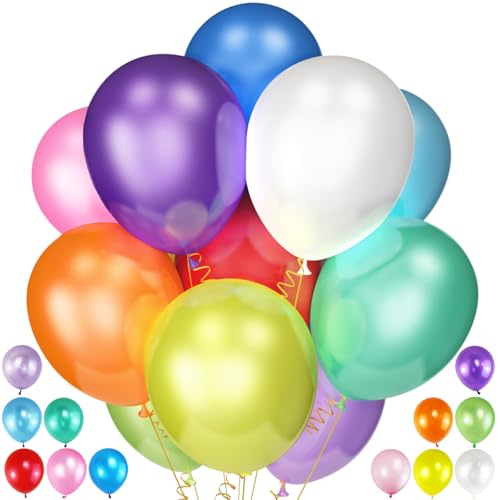
➤Balloons assorted colors: join us, you will get 120pcs 12 inch assorted color balloons in 12 different colors. Random Color.
How Long Do Helium Balloons Last? (Latex vs. Mylar)
Helium balloons generally last 8 to 12 hours when made from latex, due to helium gradually escaping through their porous surface. Larger latex balloons tend to float longer because they contain more helium and have a smaller surface-area-to-volume ratio, reducing helium loss rate. Applying a product like Hi-Float can extend their float time to a few days by creating a coating that seals the pores. However, for longer-lasting balloon displays, Mylar balloons are the best choice. Their metallic film traps helium much more effectively, allowing them to float for 3 to 5 days, sometimes even up to a week or more. This makes Mylar ideal for events planned in advance or multi-day decorations, such as those incorporating fairy lights for events to create a magical ambiance. For occasions requiring high-volume bubble effects, a foam machine can provide continuous party fun without the short float time of latex. For those seeking a more natural aesthetic, creating silk flowers offers a similar decorative alternative that can be prepared safely in advance without helium concerns. Always supervise children around both latex and Mylar balloons to prevent choking hazards, and never inhale helium, as it can be dangerous.

Extended Floating Time: This helium balloon protective fluid coats the inside of latex balloons to help slow gas loss, reducing early droop during weddings, birthdays, and professional event setups,and maintain long-lasting display effects

Helium Balloon Protection Fluid: Treat latex balloons with protective fluid to dramatically extend float time that won't discolor or stain the balloons, preserving their vibrant appearance. Perfect for event planners, decorators, and party pros.

Extended Floating Time: This helium balloon protective fluid coats the inside of latex balloons to help slow gas loss, reducing early droop during weddings, birthdays, and professional event setups,and maintain long-lasting display effects
Which Air-Filled Balloon Lasts Longer?
Mylar balloons generally last longer than latex balloons. While latex can stay inflated indoors for several weeks with proper care, they gradually soften and lose air as the rubber allows air to escape. Keep latex balloons away from heat and sunlight to extend their lifespan; even then, they tend to stay firm for a few days to a week indoors. In contrast, Mylar balloons maintain their firm shape for several days, even in warmer or less controlled environments. The foil structure of Mylar resists air loss more effectively, preventing sagging. Outdoors, Mylar’s shape stays stable longer, making it a better choice for extended displays. To extend the life of any air-filled balloon, be aware that helium tank lifespan is also influenced by storage temperature and valve care. For those considering helium inflation, choosing a mini helium tank can also affect how long the balloon stays afloat due to gas purity. Overall, Mylar provides a more durable, longer-lasting shape, while latex offers a softer, more flexible option that lasts slightly less time. To maximize latex’s lifespan, it is critical to keep them away from heat and sunlight.
How Mylar Achieves Sharper Graphics Than Latex
Mylar balloons provide significantly sharper graphics than latex due to their smooth, non-porous surface. This smooth film prevents ink from spreading, resulting in clean, razor-crisp edges. Unlike latex, which stretches during inflation and can distort images, Mylar maintains the artwork’s proportions, ensuring precise line definitions. Its stable, reflective surface enhances color contrast, allowing gradients, photos, and intricate logos to reproduce with high fidelity. The uniform substrate also supports laser-sharp detail, giving your designs a professional, polished appearance. This consistency in material ensures that when you wire and install the balloon as part of a display, the crisp graphics remain untarnished by the mounting structure. For intricate and vibrant artwork that needs to stand out, Mylar offers a clear advantage over latex. Furthermore, Mylar’s durable construction allows for safe reuse after deflation, as the material does not degrade like latex.
Latex Biodegradability vs. Mylar Landfill Persistence
Latex balloons labeled biodegradable do not break down quickly in landfills. Their biodegradation requires moist, microbially active soil—conditions that most disposal sites lack. Landfills tend to be low-temperature, anaerobic, and acidic environments, which slow or halt latex biodegradation. As a result, latex balloons can remain structurally unchanged for over 50 years in such settings, meaning their environmental impact can last for decades despite the label. For a more responsible alternative, a homemade balloon arch using reusable materials avoids these disposal issues entirely. When making paper decorations instead, choosing reusable materials ensures a similar waste-free craft approach.
In contrast, Mylar, a metalized plastic film, does not biodegrade at all. Its plastic structure makes it virtually indestructible by natural processes. Mylar persists in landfills for hundreds of years regardless of environmental conditions, making it far more resistant to breakdown. While both materials may become litter, Mylar’s durability ensures it remains a long-lasting pollutant in landfill environments.
Is Mylar Worth the Higher Price? Cost vs. Performance
The higher price of Mylar is justified if you need long-lasting, high-impact balloons. While latex balloons are cheaper—offering dozens for the cost of a single Mylar—you’re paying for performance and appearance. Mylar retains helium for up to three weeks, making it ideal for multi-day events. In contrast, latex balloons typically deflate within hours, which means more labor and replacements if your event spans multiple days.
Additionally, Mylar provides a polished, metallic finish and sharp graphics that latex cannot match. If your goal is a premium look or sustained balloon display, the extra cost is worth it. For quick, one-day celebrations where volume is more important than longevity or visual quality, latex remains the more economical choice. Your decision hinges on whether you prioritize immediate cost savings or longer display life and visual impact.

【PROFESSIONAL-GRADE QUALITY】Ideal for use in professional event planning or home decor endeavors, this protection fluid is crafted to deliver reliable results. Its professional-grade formulation ensures that your balloon decorations maintain a polished and professional appearance.

Package Included:40 inch navy blue numbers balloons 1 and 1 straw.Royal blue number 1 balloons is the best for 1th or 1 st birthday party,wedding celebration, anniversary.

High quality material: Our round foil balloons are made of durable and high quality foil material, which is safe and environmentally friendly, not easy to break and fade, lightweight, easy to hang and carry, self sealing design, reusable, and easy to store for a long time. And the balloons are designed with round shape, which can add more fun and beauty to your party.
Weather and UV Exposure: Which Balloon Survives Outdoors?
Latex balloons typically last only 4-8 hours outdoors before succumbing to sunlight and UV damage. UV rays attack latex at the molecular level, causing the rubber to break down, which results in color fading, a chalky appearance, and increased brittleness. This deterioration makes latex balloons prone to cracking and popping within hours, especially in direct sun and darker colors that absorb more heat. For example, choosing party favors like latex balloons for outdoor use requires careful timing and shade.
In contrast, Mylar balloons last much longer—around 24 to 48 hours—under similar conditions. Mylar resists UV damage better because of its material properties, though prolonged exposure can still weaken seams and lead to delamination over time. Wind and mechanical stress affect both types, but heat and UV exposure are the primary factors determining how long each balloon survives outdoors.
For outdoor events in shaded or mild conditions, latex can hold up for a few hours. However, if your display will be exposed to direct sunlight for an extended period, Mylar is the better option due to its superior UV resistance.

【Neon Balloons】Neon Star Balloons Kit includes 7Set Neon balloons Cone Balloons in 7 bright colors,including yellow,green,orange,red,pink,Purple and Blue. Under the illumination of the black light, the balloon emits a bright glow, adding beautiful colors to the party

【 Must-Have Neon Glow Party Highlight 】: Elevate your birthday party with the most eye-catching neon decor! Our fluorescent star balloon kit creates a bold, immersive glow-in-the-dark atmosphere and serves as the perfect photo backdrop – your guests will love the vibrant neon hues and unforgettable glow party vibe.

【Neon Balloons】Neon Star Balloons Kit includes 6Set Neon balloons 72Pcs Cone Balloons in 6 bright colors,including yellow,green,orange,red,pink,and Blue. Under the illumination of the black light, the balloon emits a bright glow, adding beautiful colors to the party
When to Choose Latex Over Mylar (and Vice Versa)
You should choose latex balloons for large-volume orders, casual events, and eco-conscious celebrations. Latex is generally cheaper per balloon and biodegradable, making it ideal for bulk giveaways and environments aiming to reduce waste. Its uniform color and shape make it easy to coordinate and assemble into big clusters, especially when detailed branding or images aren’t necessary. Additionally, uplight fixtures placed beneath latex clusters can create dramatic shadow effects that enhance the overall ambiance. For events requiring a quick setup, a latex balloon arch can be created without a stand using only fishing line and command hooks.
On the other hand, opt for Mylar balloons when durability, visual impact, or custom branding is a priority. Mylar’s extended helium retention means fewer refills during long events or multi-day displays. Its shiny, reflective surface and sharp printed logos elevate the aesthetic and make a strong impression at weddings, corporate functions, or promotional settings. Mylar also offers custom shapes like stars, characters, or brand icons that latex balloons can’t achieve, providing a higher-end look and feel. Mylar balloons are known to hold helium for up to two weeks, significantly outlasting latex in most conditions.

Package includes 54 balloons in 9 bright colors.

Helium‑Grade Quality: Made from durable, high‑quality latex for long‑lasting inflation with helium or air.

1. Spooky Complete Halloween Decor Set: This all-in-one decoration kit comes with Halloween paper garland pulls and matching latex balloons, featuring classic Halloween elements like pumpkin, bat, spider and ghost. It instantly creates a creepy, festive and mysterious haunted atmosphere for your Halloween party.
Pro Tips to Extend Balloon Life for Both Types
To extend the lifespan of both latex and Mylar balloons, proper storage is essential. Keep uninflated balloons indoors in a cool, dry space between 68 and 72°F. Store latex balloons sealed in their original packaging to prevent dehydration, and keep Mylar balloons flat to avoid folds near the valve. Avoid placing balloons in hot cars or near direct sunlight, heat vents, or fans, as heat causes latex to pop and warps Mylar’s shape.
Inflating balloons correctly also helps preserve them. Use a pump instead of your mouth to avoid overfilling, which can cause popping or shape distortion. For latex balloons, adding a treatment like Hi-Float can significantly increase float time. Handle balloons gently and keep away from sharp objects, oils, and high-traffic areas to prevent accidental punctures. Before inflation, if you’re printing on balloons, do it first to minimize stress on the material. Rotate your stored balloons periodically to prevent them from becoming compressed and losing their shape over time.