If your silk flowers don’t quite look real, you’re not alone. Sometimes, a few simple tricks can transform their artificial shine and stiff appearance into something more life-like.
With just a bit of effort, you can make your silk blooms blend seamlessly into your decor, giving them a fresh, natural look. Keep reading to see how easy it is to bring your faux flowers to life.
Why Silk Flowers Look Fake (And How to Fix It)
The glossy, plastic sheen on a silk flower immediately marks it as fake. That shine results from an artificial coating designed to reflect light evenly, creating an unnatural glint. To fix this, apply a matte finish or spray that reduces the gloss and dulls the shine. You can also gently dust the petals with a soft cloth or brush to lessen the reflective surface. For an even more realistic look, reshape and soften the petals after handling to mimic natural irregularities. Adjusting the lighting—using softer, indirect light—can also minimize the highlighting that emphasizes the plastic coating. These steps will help your silk flowers look more authentic and less artificial. When choosing a surface to work on, remember that textured, non-glossy finishes like those found on flannel-backed vinyl tablecloths can provide a practical, matte workspace that reduces glare while you treat your petals. If you want to extend the life of your treated arrangements, consider storing them in a dry, cool place away from direct sunlight, just as you would reuse foil balloons carefully to avoid punctures and keep their shape intact. For a truly professional display, use a high-quality fog machine to create a subtle, atmospheric haze that softens the overall lighting and masks any remaining artificial sheen.
Choose Quality Silk Flowers That Look Real
To choose realistic silk flowers, start by examining the petals’ shading. Look for flowers with natural gradients—colors that transition smoothly from deep to light, and with subtle hints of green or brown near the center. Avoid blooms with flat, uniform colors, as they look fake. Slight irregularity in petal size and shape is another sign of authenticity; perfect symmetry often indicates cheap manufacturing. Check the stems—they should feel matte and have a dusty, natural finish. Bright green, glossy stems are a red flag. The stems should also be flexible enough to bend without cracking or snapping. Gently feel the petals—they should be soft and have semi-transparent edges, not stiff or plasticky. Matte leaves with visible veins further enhance realism. Invest in flowers with multi-layered petals that are securely attached and have a sturdy, well-constructed base. For a charming display, consider pairing your silk flowers with warm fairy lights to enhance their natural look and create a soft glow. For a cohesive event aesthetic, treat your floral centerpieces with the same care you would give premium wedding chair covers. When evaluating silk flowers, prioritize those that mimic the quality and performance of top-tier decorative items to ensure lasting beauty.

Unique design:The peony artificial flowers are made of high-quality silk materials. The flowers are full, look very realistic. The stems of the flower branches are flocked with light green leaves, making the whole bouquet look more real and charming.

Artificial Flowers Combo Box Set: ASTRYAS artificial flowers has bright colors and different types of flowers, which can make your home more gorgeous especially for spring summer season. The floras look natural and realistic.

Artificial Flower Kit for DIY Floral Arrangements: 38-piece artificial flower set designed for creating your own bouquets, centerpieces, and decorative floral designs.
Shape Silk Flower Stems for Natural Curves
To shape silk flower stems for natural curves, start by inserting floral wire just below the calyx for stem wiring. Use 22–24 gauge wire for standard stems and 18 gauge for heavier blooms. Run the wire parallel to the stem, then wrap it with floral tape, stretching the tape as you go to activate its grip. Begin wrapping near the flower head and spiral downward, ensuring the wire is securely anchored. For added support, the kit includes 100 pieces of 26-gauge stem wire for shaping and securing stems. Using a ring light with stand can help you see subtle stem angles and wire placement clearly during this detailed work.
For natural shaping, guide the stem slowly with your fingers, exaggerating any existing curves rather than forcing new ones. Upright blooms look best with a gentle S-curve, while cascading flowers benefit from a softer sweep. Once you’ve achieved the desired shape, tighten the bends near the base of the bloom to prevent sagging. Avoid sharp bends or repeatedly jabbing at the stem, as this can cause it to snap. Gentle, continuous adjustments will give your stems a smooth, lifelike appearance that enhances the realism of your arrangement.

Multiple Sizes and Colors: Our flower stems are 35cm long and come in three basic sizes - 50 pieces of 16 gauge (0.6 inches) 、50 pieces of 18 gauge (0.054 inches)and 100 pieces of 26 gauge (0.027 inches) - to give you the flexibility you need for a variety of craft projects. There are four vibrant colors to choose from: green, white, light green, and brown. With a large number and a variety of colors, these flower stems are perfect for adding a touch of color and creativity to any arrangement or craft

This floral wire is ideally suited for arts and crafts projects. It is used for everything from jewellery making to securing wedding bouquets.

Value Kit: You will receive 200 pieces of 26 gauge White floral wires, each of 14 inch in length and 0.02 inch in diameter.
Soften Silk Flower Petals and Remove Creases
To soften silk flower petals and remove creases, start by using low, controlled steam to relax the synthetic fibers. Brief exposure, typically less than a minute, helps petals open naturally. Rotate the flower to ensure steam reaches the back and center petals evenly, avoiding direct dry heat that could cause distortion. For set creases, apply a fine mist or damp cloth precisely where needed; spot-treating prevents petal fraying better than soaking broadly. Gently smooth dampened petals by hand and allow them to air-dry completely, which helps hold their shape. Work in small sections, separating petals first so moisture penetrates folded areas. Use minimal force to prevent creating new wrinkles or damaging delicate edges. Additionally, ensure that your color matches are careful, so any adjustments blend seamlessly with the flower’s original tones. For stubborn creases, applying a vinegar-water mixture with a tiny brush directly onto the crease can help soften the fibers before pressing. To avoid damaging delicate edges, always test cleaning methods on a hidden petal before proceeding with a full treatment. Consider using a budget backdrop stand to display your finished silk flowers, allowing them to hang freely and maintain their newly softened shape without crushing. A simple materials list helps you gather steamers, misters, and brushes efficiently before starting.

Luxurious Mixture: A premium combination of artificial flowers and lush greenery. Perfect for weddings, home décor, or simply indulging your love of flowers, SwanMoon faux flowers create a warm, romantic, and inviting atmosphere anywhere.

Design Inspiration: Evoke the romance of the French coast with Ling's moment's dusty blue and navy decor

🌹 Package Include: 50 pcs burgundy fake roses with long stems. Pot not include. The roses stem height is 20.1 inches. Bendable wire stems allow easy shaping to fit vases, bouquets, garlands or craft projects. Customize your decor without worrying about wilting or breakage.
Hide Silk Flower Stems in Opaque Vases
To hide silk flower stems effectively, start by choosing opaque vases made of ceramic, stoneware, or frosted glass. These materials immediately conceal stems and reduce the need for extra cover-up materials. Dark or solid-color vessels further diminish the visibility of stems, making the arrangement look seamless. To enhance realism, consider applying a matte finish spray paint to the stems for a more natural, non-shiny appearance. When working with these stems, always handle them gently to avoid bending or crushing the delicate petals and leaves.
Secure your stems with dry floral foam trimmed to fit snugly inside the vase. This prevents wobbles and keeps the flowers steady. To disguise exposed bases, add filler materials like marbles, pebbles, or sand densely around the stems. Pick colors that match your theme for a cohesive look or select moss and twigs for an organic aesthetic. For extra tidiness, bundle stems with floral tape before placing them into the vase, which helps reduce visual clutter. Position larger blooms near the rim to block any gaps and enhance the appearance of an intentional, polished arrangement. For creating tall displays, consider using balloon stands for columns to provide sturdy vertical support similar to that used in stunning column arrangements. To keep the arrangement stable and long-lasting, always press down firmly on the foam when inserting stems so they stay put.

Exquisite Handmade Craftsmanship: Our modern vases, standing at 8 inches tall and 3.5 inches wide, are meticulously handcrafted with attention to detail. The elegant ribbed texture adds a sophisticated touch, creating an eye-catching focal point in any room. Each white vase is a testament to skilled craftsmanship, ensuring a unique and high-quality addition to your home decor.
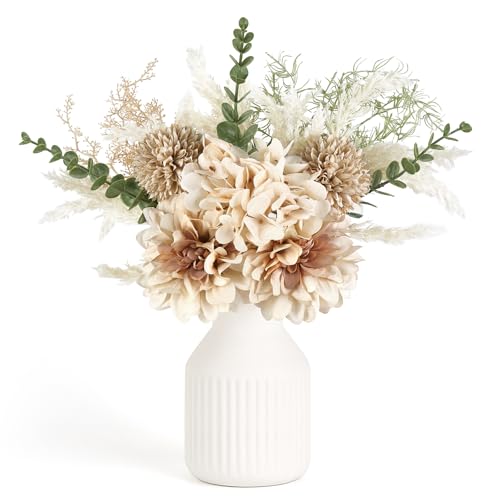
Small Faux Flowers in Vase: The artificial flowers for decoration include fake dahlia, dandelion, eucalyptus plants, and a matte white ceramic vase with vertical stripe. Putting the fake flower bouquet in the vase will create a poetic atmosphere, suitable for table centerpieces, coffee table decor, farmhouse decor, living room decorations

VERSATILE VASE FOR DECOR – This ceramic vase for decoration is a perfect centerpiece for all rooms and occasions thanks to its simple and modern design. You can place on your dinner table, in the dining room, living room, bedroom, office, restaurant, kitchen, Corridor, floating shelves reading room and more (Flowers are not included)
Arrange Silk Flowers With Odd Numbers and Depth
Grouping your silk flowers in odd numbers—such as three, five, or seven—mimics nature’s irregularity and prevents a rigid, artificial look. Using odd numbers for each type of bloom within your arrangement creates a more natural, effortless appearance, rather than just focusing on the total count. This principle of using odd numbers is similar to how top rope lights are often grouped to create a more organic, less structured display. For a similarly memorable burst of color, you could consider using confetti cannons to add an exciting, celebratory element to your arrangement. To achieve a similar effect with lighting, consider using LED strip lights that offer adjustable color temperatures to enhance the natural look of your blooms.
To build depth, vary the height of your stems. Place taller stems toward the back or center, and stagger shorter ones toward the front. Within each group, don’t align all stems at the same level; instead, slightly offset some blooms forward and others back. This creates a layered recession that guides the eye and adds movement, replacing a flat silhouette with a more dynamic, balanced look.

🌺Premium Floral Arrangement | Measuring approx 16 inches in full length with a weight of 6 oz, this artificial flower bouquet is blended with white forsythia, dandelions, chrysanthemum, phalaenopsis, eucalyptus, sages, orchids and matching leaves. Professionally designed by floral artists, it features full layers and a lifelike natural look.

Premium Material: Artificial flower made of high plastic and soft non-woven cloth, soft feeling, the flower heads are very firm and do not fall off easily,bendable, durable for long time use

Material: Silk flowers, metal wire wrapped in plastic stems, plastic eucalyptus and greenery plants.
Use Real Greenery to Make Silk Flowers Look Natural
Using real greenery to enhance silk flowers creates a more natural appearance. Blend fresh foliage with your artificial blooms to soften their synthetic look and introduce subtle, irregular variations that mimic real plants. Layering leaves at different heights adds depth and breaks up uniform lines, resulting in a relaxed and organic silhouette. Incorporate seasonal foliage with diverse shapes and matte finishes to introduce natural textures resembling living plants. Curved stems and trailing greenery add movement around the blooms, making the arrangement more dynamic. Strong, flexible greenery allows you to position it easily without damaging petals. Tucking foliage around the base helps conceal mechanics like floral foam, wire, and stem joins, maintaining a tidy look. Select greenery that matches your room’s lighting and scale, choosing types that would naturally grow together. For events, silk flowers offer durability and cost savings compared to fresh blooms, making them a practical choice for large displays. Use greenery sparingly to keep the arrangement balanced and easy to maintain. For long-lasting displays, consider that even sparklers expire over time, so periodically refreshing your natural elements ensures your silk flowers stay vibrant. Remember that you can extend the life of your display by using sealed tanks of compressed gas to mist the greenery, keeping it crisp and hydrated.
Keep Silk Flowers Fresh With Simple Care
Regular dusting is the most effective way to keep silk flowers looking fresh. Use a soft brush or microfiber cloth weekly, starting at the top of the arrangement to prevent dust from resettling on lower petals. This simple routine helps maintain vibrant colors and prevents a dull film from forming. For stubborn dirt, a damp cloth can be used on colorfast blooms, but always test a small, hidden area first to avoid damage. For a wedding arch, attaching flowers with floral wire ensures they stay secure and do not shift during handling.
When dust builds up, dry methods like shaking the flowers inside a bag with salt work well because they don’t introduce moisture that could harm the silk. Handle the blooms gently, especially when reshaping petals—use a cool hair dryer to blow dust out of tight folds, then carefully pinch the petals back into their natural form. To keep your silk flowers looking lifelike longer, keep them out of direct sunlight and away from heating or cooling vents. Doing so preserves their colors and shape over time.